


There’s a common misconception about international consulting programs: that meaningful impact requires long flights, packed luggage, and weeks away from home. The Online Kambia Business Program is here to prove otherwise. In 2026, two universities from the United States partnered with communities in Panama to deliver real, lasting business consulting, entirely online. What they accomplished is a testament to what happens when academic rigor, human connection, and a truly flexible format come together.
This is the story of two very different teams, two very different clients, and one shared conviction: that no matter how many students you have in a room, or how far apart they are, you can always make a difference.
What Is the Online Kambia Business Program?
The Online Kambia Business Program is a 100% virtual consulting experience that connects university students and professors with small business owners and community entrepreneurs in Panama. Students apply real-world business skills in marketing, branding, financial strategy and logistics to help local entrepreneurs solve their most pressing challenges.
This accessibility is exactly what makes the program so powerful. Whether a course is held entirely in person, fully remote, or somewhere in between, students can participate meaningfully. The online format doesn’t diminish the experience, it expands who gets to be part of it.
University of Colorado Colorado Springs: Small Team, Big Heart
Some of the most remarkable things happen in small groups.
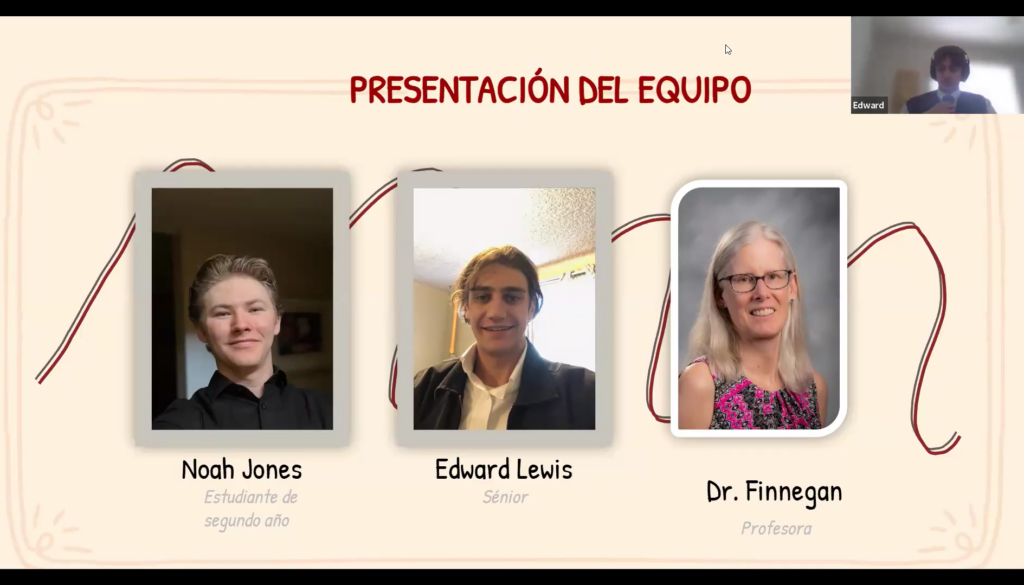
The team from the University of Colorado Colorado Springs (UCCS) consisted of just two students — Edward Lewis and Noah Jones — guided by their faculty member, Carol Finnegan. Small in size? Absolutely. Underwhelming in impact? Not even close.
Their client was Betzi Vega, the owner of Delicias Las Vegas, a home-based food delivery business operating along the San Vicente–Metetí route in Darién, Panama. Betzi serves a loyal customer base of university students from the University of Panama who need dinner options during their evening classes, and she regularly collaborates with the Municipality of Pinogana for public events and celebrations. After facing a difficult period of intermittent operations due to a family emergency, Betzi has been working hard to rebuild her brand and recover the ground she lost.
The UCCS team got to work with impressive depth and creativity.
Edward Lewis went above and beyond in one unforgettable way: he delivered his entire final presentation in Spanish, without a translator. In a consulting program designed to bridge cultural and geographical gaps, this gesture wasn’t just impressive, it was meaningful. It told Betzi, in her own language, that her story mattered enough to be honored.
Noah Jones developed a comprehensive social media strategy focused on Instagram, giving Betzi a clear, actionable roadmap to rebuild her digital presence and reconnect with her core audience: university students who are hungry (literally) for good food during late-night classes.
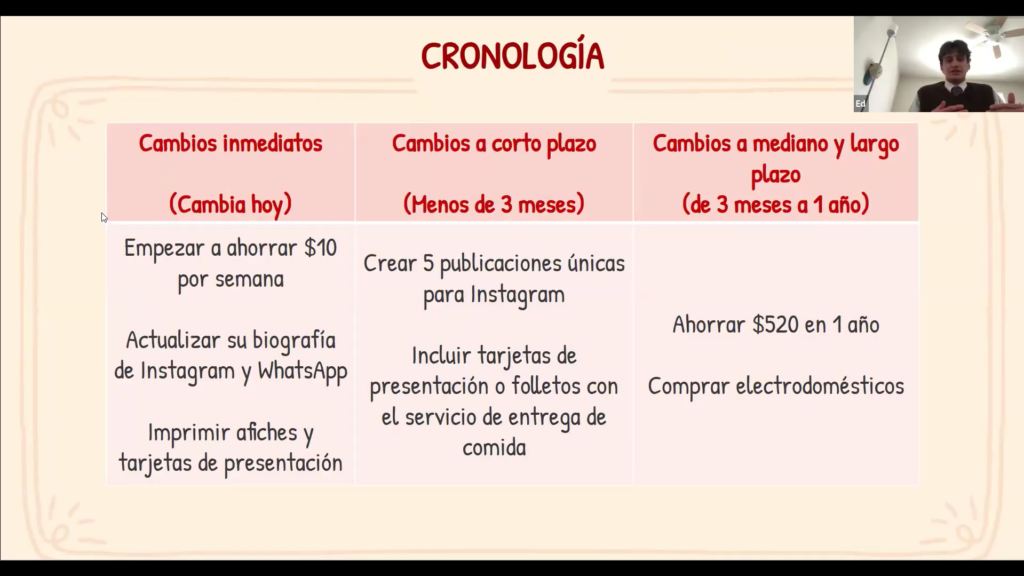
Together, they tackled one of Betzi’s most practical needs: her logo existed only as a PNG file. The team vectorized it from scratch and created multiple polished versions, giving her a professional visual identity she can use across every platform and printed material. They also developed different menu design options to help her present her offerings: Hawaiian-style hamburgers, BBQ wings, and more, in a way that reflects the quality of her food.
 Their consulting partner, Janeth P. Castrejón, a Strategic Marketing Leader and community impact storyteller based in Panama, played a crucial role in grounding the team’s recommendations in the local context. Her knowledge of the Panamanian market helped refine the strategies to ensure they would actually work on the ground.
The lesson here is clear: it doesn’t matter how many students are in a group. Two motivated, prepared students with a good faculty member and the right support can deliver consulting that genuinely moves the needle for a small business owner who needs it.
Lindenwood University: Healthy Competition Meets Holistic Impact
If the UCCS team showed what a small group can achieve, the team from Lindenwood University demonstrated something equally powerful: what happens when scale, diversity, and healthy competition combine.
Professor Larry Acker coordinated a group of over 30 students, a remarkably large cohort for this type of program. What made this group particularly special is that Lindenwood’s program sits at an unusual and fascinating intersection: it’s a business program, but many of its students are aspiring healthcare entrepreneurs. Think pharmacy owners, clinic administrators, health-focused social enterprises. This is not your typical MBA consulting team.
And that’s precisely why the match worked so well.
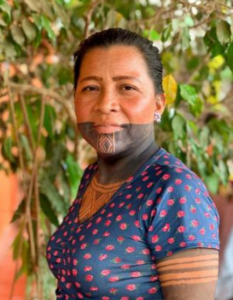
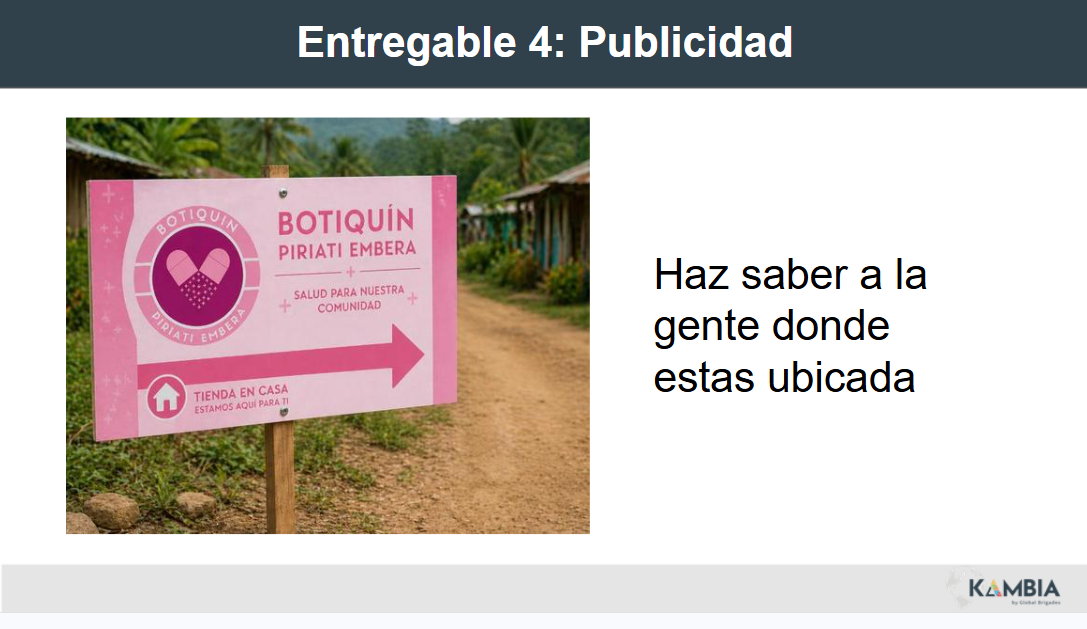
Their client was Migdalia Sabugara, a Community Health Entrepreneur (CHE) and the owner of Botiquín Piriatí Emberá, a small community pharmacy in the indigenous Piriatí Emberá community in Panama Este. Migdalia was trained through Global Brigades’ ASES program, which equips community members in rural areas with the knowledge and legal permits to operate small over-the-counter pharmacies. For many people in her community, located far from urban health services, Migdalia’s pharmacy isn’t just a business. It’s a lifeline.
This is where Kambia’s model becomes so visible. Migdalia’s business journey didn’t begin with this online program, it began with the ASES program years earlier. She has previous consulting programs under her belt, a name and logo for her pharmacy, a receipt system, and a WhatsApp Business profile. The Lindenwood team wasn’t starting from zero. They were building on a foundation that other programs in the organization had already laid, demonstrating the power of a multi-program, long-term approach to community development.
A Competition Worth Having
With over 30 students to manage, Professor Acker introduced a brilliant structure: the group was divided into seven competing teams, each developing their own full consulting package for Migdalia. Only the two best teams earned the right to present their final work.
The result? A healthy, energizing competition that pushed every group to think harder, design better, and consult more carefully. Students from in-person classes, virtual classes, and even those who attended asynchronously via recordings all contributed, proof that the online format truly has no ceiling on inclusion.
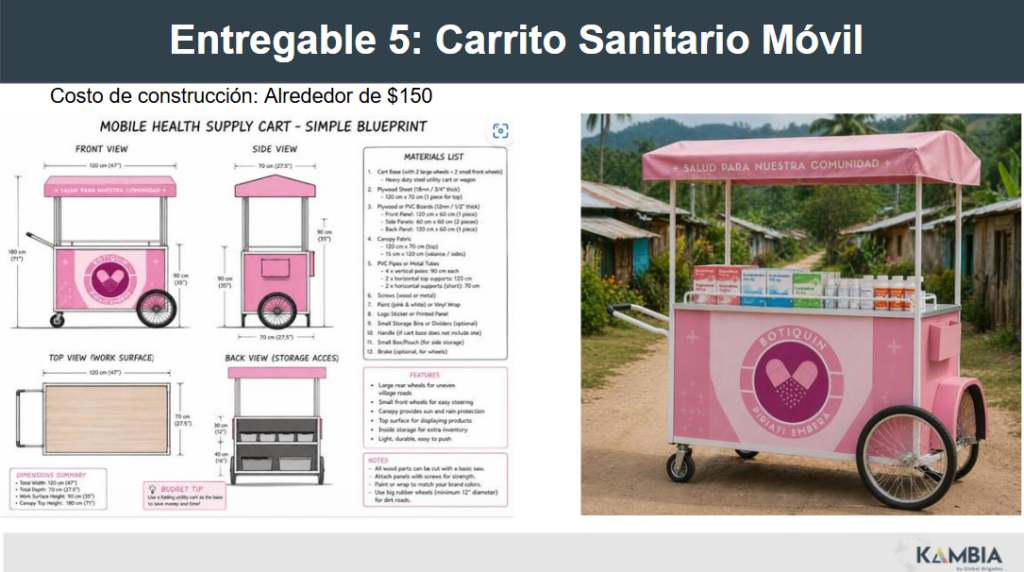
The winning team delivered a consulting package that left a real mark:
- A clean, modern new logo in Migdalia’s favorite color: bright, vibrant pink, because a brand should reflect the person behind it.
- A PVC roadside sign to be installed outside her home, increasing visibility for passersby.
- A bold, innovative idea: a mobile cart that would allow Migdalia to bring her pharmacy to people, rather than always waiting for them to come to her, a concept that, if implemented, could transform how she serves her community.
Why the Online Format Works
Both of these experiences underscore something important: the online model isn’t a compromise. It’s an opportunity.
For students, it means they can participate in meaningful, real-world consulting without disrupting their schedules or incurring travel costs. For professors, it means they can run an internationally impactful program from any classroom, or any living room. For the communities in Panama, it means more people, more ideas, and more energy directed toward helping them grow.
And critically, the online format scales. Whether you’re a team of two or a group of thirty, the program adapts. A small group can go deep. A large group can bring breadth, creativity, and even friendly competition. The format doesn’t dictate the impact, the people do.
If you’re a student or professor looking for a program that’s flexible, meaningful, and genuinely impactful, the Online Kambia Business Program might be exactly what you’ve been looking for. And the best part? You don’t need a plane ticket to get started.
0 Comments